Japan's Smart Agriculture Revolution: Agri-Tech Opportunities
Japan's aging agricultural sector is ripe for a tech-infused revolution. Discover the key opportunities for foreign entrepreneurs to innovate and thrive in Japan's burgeoning 'Smart Agriculture' market.
4 min read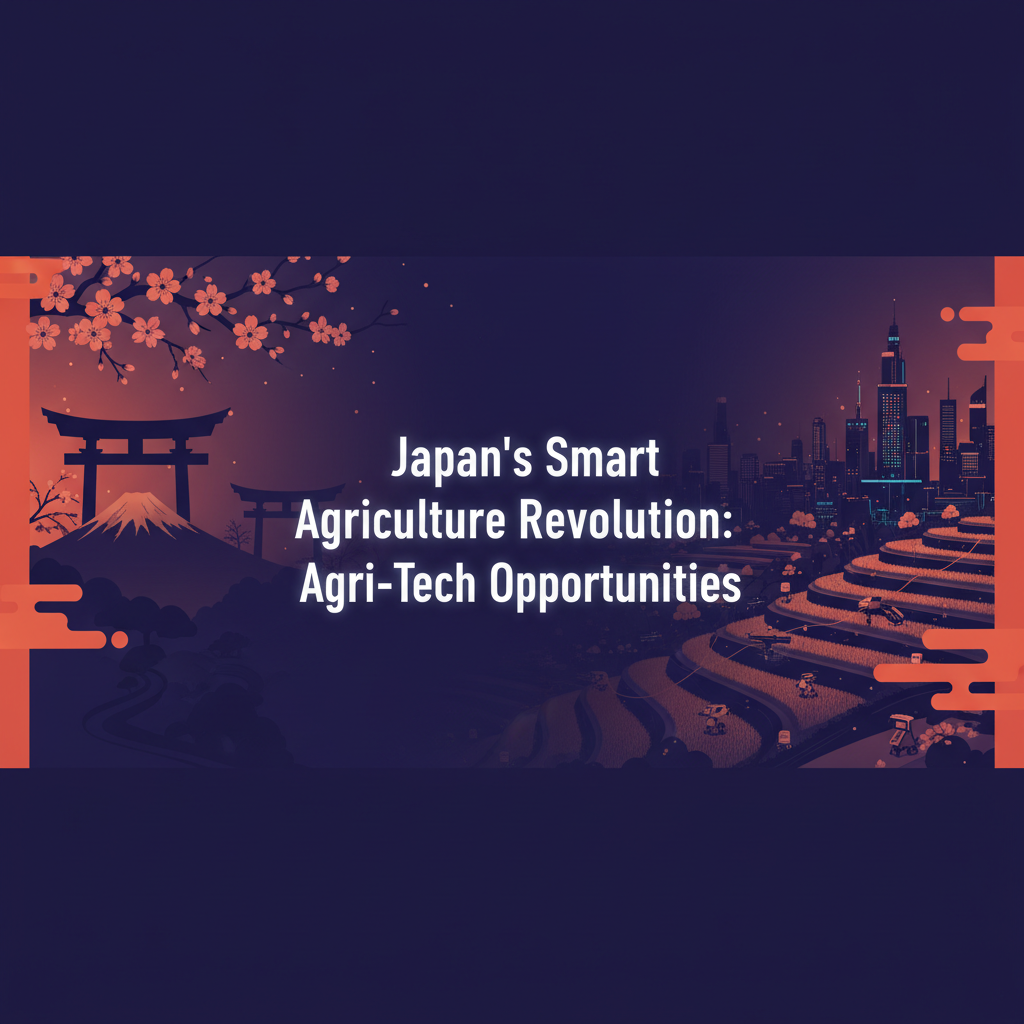
Japan, a country known for its technological prowess, is facing a critical challenge in its agricultural sector. With an aging workforce and a declining number of farmers, the nation is turning to innovation to secure its food future. This shift has opened up a fertile new landscape for tech-savvy entrepreneurs. Welcome to the world of Japanese 'Smart Agriculture' or 'Agri-Tech'—a sector brimming with opportunities for those ready to plant the seeds of innovation.
Why Now? The Driving Forces Behind Japan's Agri-Tech Boom
Understanding the 'why' is key to tapping into the 'how'. Several converging factors make Japan a hotbed for agricultural technology right now. The most significant is a demographic crisis: the average Japanese farmer is over 67 years old, and the workforce has shrunk dramatically over the past few decades. This creates a desperate need for solutions that boost efficiency and reduce reliance on manual labor.
Furthermore, the Japanese government is actively pushing for this transformation. Through the Ministry of Agriculture, Forestry and Fisheries (MAFF), it has set ambitious goals for 'data-driven agriculture' and is offering substantial subsidies and support for businesses entering the agri-tech space. This combination of an urgent market need and strong government backing creates a powerful incentive for innovation.
Key Opportunity Areas in Japanese Agri-Tech
So, where are the most promising niches for a foreign entrepreneur? The opportunities are diverse and cater to a range of technological expertise:
- Precision Farming & IoT: Implement sensor technology, drones for crop monitoring, and GPS-enabled equipment to optimize water, fertilizer, and pesticide usage. There's a high demand for systems that can collect and analyze data to provide actionable insights for traditional farmers.
- Robotics & Automation: From automated tractors and robotic fruit pickers to drones that handle pollination, solutions that automate laborious tasks are highly sought after.
- Indoor & Vertical Farming: With limited arable land, controlled-environment agriculture is a massive growth area. Technologies that enable stable, year-round production of high-value crops like herbs, leafy greens, and strawberries are in high demand, especially in urban areas.
- Supply Chain & Data Management: Develop platforms that improve traceability, connect farmers directly to consumers or restaurants, and use AI to predict yields and market prices.
Navigating the Market: Support, Subsidies, and Strategy
Entering the Japanese market requires a strategic approach. Fortunately, you don't have to do it alone. The Japanese government, particularly MAFF, offers various grants and subsidies for companies developing and implementing smart agriculture technologies. Researching these programs is a crucial first step.
Collaboration is key. Many established Japanese agricultural equipment manufacturers and tech companies (like Yanmar, Kubota, and NEC) are actively looking for partners with cutting-edge software and hardware solutions. Attending industry trade shows like AGRITECH TOKYO can be an excellent way to network and find potential collaborators.
Pro Tip: Start by focusing on a specific region or agricultural specialty. Japan's agriculture is diverse, from Hokkaido's vast fields to Shikoku's citrus groves. Tailoring your solution to a specific regional need can be more effective than a one-size-fits-all approach.
Cultural Keys to Unlocking Success
Technology alone won't guarantee success. Understanding and respecting Japanese business culture is paramount. Building trust is a gradual process; it's about showing long-term commitment to the market and building personal relationships. This is not a market for quick wins but for sustainable, long-term partnerships.
When dealing with farmers and local cooperatives, patience, humility, and a genuine desire to solve their problems are essential. Demonstrating how your technology can concretely improve their lives and yields will be far more effective than aggressive sales tactics.
"The most successful foreign entrepreneurs are not just selling a product; they are providing a holistic solution that respects the deep-rooted traditions of Japanese farming while gently introducing a more sustainable, efficient future."
Fictional Success Story: 'AeroVege'
Consider the story of 'AeroVege,' a startup founded by a European software engineer. She noticed the high price and inconsistent quality of imported herbs in Tokyo. Partnering with a small, family-owned machinery shop in Gunma Prefecture, she developed a modular, automated vertical farming unit specifically for restaurants.
Instead of trying to sell directly to conservative agricultural co-ops, she targeted chefs, offering them on-site, year-round access to fresh, high-quality basil and microgreens. The success with restaurants created a pull-through effect, and soon, local distributors and agricultural groups started approaching 'AeroVege' to learn more about their technology for larger-scale applications. The startup's success came from identifying a niche market, finding a local partner, and demonstrating clear value before scaling up.
Conclusion
Japan's agricultural sector stands at a pivotal moment. The challenges are significant, but the opportunities for innovation are even greater. For foreign entrepreneurs with the right technology, a collaborative spirit, and a long-term vision, Japan's smart agriculture revolution offers the chance to build a truly impactful business. The field is plowed and ready; now is the time to plant your ideas.